

News
Clamp Down On Binance It’s Destroying Our Economy- Presidential Spokesman, Bayo Onanuga


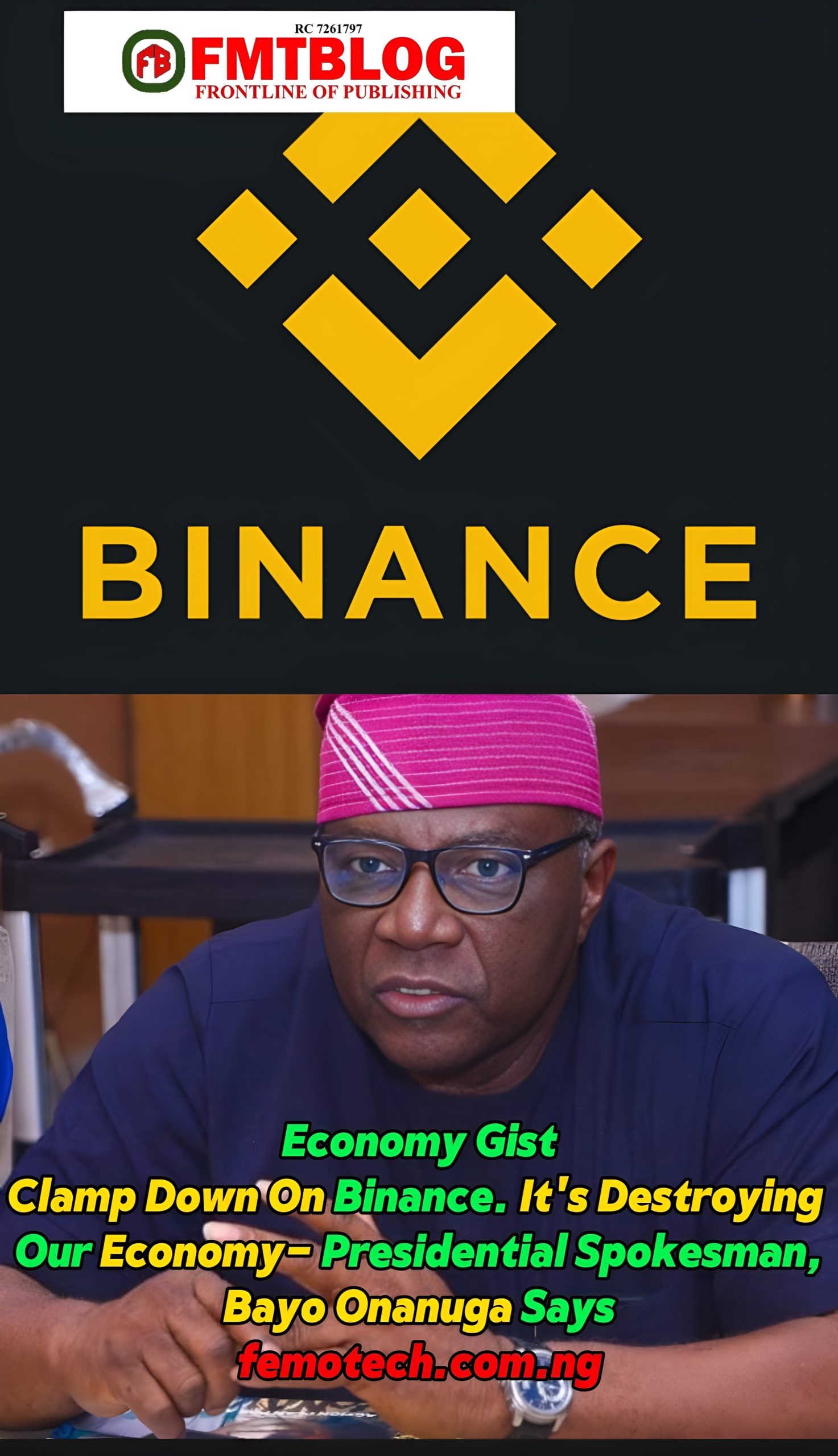


Binance is destroying the economy of Nigeria, clamp down on the cryptocurrency platform now, Bayo Onanuga Says.
Bayo Onanuga, a Presidential spokesman, has revealed that the popular cryptocurrency trading platform Binance will damage the economy of Nigeria, if swift, drastic measures are not implemented.
Onanuga made this revelation while on Channels Television Politics Today Programme on Wednesday, February 28, said Binance is arbitrarily fixing foreign exchange rates.
Onanuga said,
“If we don’t clamp down on Binance, Binance will destroy the economy of this country. They fix the rate. We have saboteurs. Look at what Binance is doing to our economy. That is why the government moved against Binance. Some people sit down using cyberspace to dictate even our exchange rate, hijacking the role of the CBN.
“They just sit down and fix anything they like. It’s a sabotage and we are trying to prevent that from happening henceforth.”
Follow us on socials → Telegram | X/Twitter | Facebook | WhatsApp |WhatsApp Channel |Mobile App
DO YOU AGREE WITH HIS ASSERTION, GUYS ? DROP YOUR COMMENTS BELOW;








President Tinubu honoured 50 Nigerians on Democracy Day 2026, including Dasuki, Joe Igbokwe and Dele Alake. See the full list and what it means.

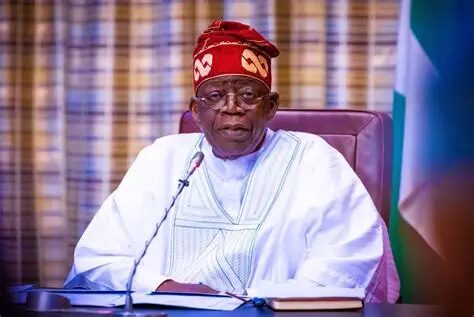
On 12 June 2026, President Bola Tinubu conferred national honours on 50 Nigerians described as key figures in the country’s pro-democracy struggle.
The announcement was made during the 2026 Democracy Day address, which commemorates the annulled 12 June 1993 presidential election. Honourees include journalists, civil rights activists, and military officers.
President Bola Tinubu conferred national honours on 50 prominent Nigerians on Friday, 12 June 2026. The honourees were recognised as central participants in the nation’s pro-democracy movement, a campaign that opposed military dictatorship throughout the 1990s.
The announcement formed part of the president’s nationwide 2026 Democracy Day address. Democracy Day marks the anniversary of the 12 June 1993 presidential election, a poll widely regarded as the freest in Nigerian history before its annulment by the military government of the period.
READ ALSO: Why I Refused To Align Any Political Party In Nigeria—Yakubu Gowon
This article outlines the context of the awards, identifies the categories of honourees, names notable recipients such as Sambo Dasuki, Joe Igbokwe, and Oladele Alake, and explains the next steps in the conferment process.
Why did Tinubu confer the national honours on 12 June 2026?
The conferment is tied directly to Democracy Day, an annual observance commemorating the 12 June 1993 presidential election. President Tinubu used the occasion to recognise individuals identified as central figures in Nigeria’s transition from military rule to civilian democracy.
In his address, the president stated that the honourees suffered persecution in the course of the pro-democracy struggle. He noted that many endured indignities, exile, incarceration, and, at times, solitary confinement so that Nigeria could enjoy democratic governance today.
The recognition therefore functions as both a historical acknowledgement and a formal state honour, linking the sacrifices of the 1990s to the present democratic order.
Who are the notable recipients of the national honours?
The honours list comprises several categories of recipients, including journalists, civil rights leaders, legal practitioners, and senior military officers. Among the most widely recognised names are the following:
- Oladele Alake, a long-standing public figure in Nigerian governance and media.
- Joe Igbokwe, a prominent political activist and commentator.
- Colonel Sambo Dasuki, a senior military officer included in the soldier-democrats category.
- Dr Joe Okei-Odumakin, a recognised civil rights campaigner.
- Dr Arthur Nwankwo (posthumous), honoured for his role in the democratic struggle.
- Ben Charles-Obi (posthumous), recognised among the journalists and activists.
The inclusion of posthumous awards reflects the state’s intention to acknowledge contributors who did not survive to witness the present democratic dispensation.
What categories of honourees were recognised?
The honours list is organised into two broad groupings. The first comprises journalists, lawyers, academics, and civil rights leaders. The second comprises military officers designated as “soldier-democrats”.
Journalists, lawyers, and civil rights leaders
This grouping recognises individuals who advanced the pro-democracy cause through media, advocacy, and legal channels. Named recipients include:
- Barrister Ayoka Lawani
- Tunde Fagbenle
- Oladele Alake
- Olatunji Bello
- Louis Odion
- Segun Babatope
- Sam Omatseye
- Sir Ademola Osinubi
- Bola Bolawole
- Lade Bonuola
- Femi Kusa
- Debo Adeniran
- Chief Ayo Opadokun
- Chief Ralph Obiora
- Ose Osayande
- Barrister Osa Director
- Professor Sylvester Odion-Akhaine
- Dr Arthur Nwankwo (posthumous)
- Dr Osagie Obayuwana
- Dr Joe Okei-Odumakin
- Barrister Titus Mann
- Joe Igbokwe
- Richard Akinnola
- Ben Charles-Obi (posthumous)
- George Mbah
- Dr Niran Malaolu
- Major-General Ishola Williams (retired)
- Femi Aborisade
- Jenkins Alumona
- Gbemiga Ogunleye
- Muyiwa Adekeye
- Babajide Kolade-Otitoju
- Ike Okonta
Soldier-democrats
This grouping recognises military officers associated with resistance to military dictatorship. Named recipients include:
- Major-General M. A. Garba
- Brigadier-General Lawal Jaafaru Isa
- Colonel Umar Farouk Ahmed
- Colonel Sambo Dasuki
- Colonel Lawan Gwadabe
- Brigadier Jonathan Ndam Temlong
- Colonel Musa Shehu
- Major-General Chris Eze
- Major-General Harris Dzarma
- Colonel Isa Jibrin
- Major-General Joseph Oshanupin
- Colonel Olusegun Oloruntoba, Olugbede of Gbede Kingdom
- Lieutenant-Colonel Happy Kefas Bulus
- Colonel J. Okai
- Colonel Emmanuel Ndubueze
- Lieutenant-Colonel Yakubu Muazu
- Brigadier Yahaya Abubakar, the current Etsu Nupe and existing holder of the CFR title
When will the awards be formally presented?
The president stated that the formal presentation and conferment of the awards will be carried out in the coming days. According to the address, the full honours list will be released within the next few days.
The announcement therefore represents the declaration stage of the process rather than the formal investiture, which is scheduled to follow.
What does this conferment signify for Nigeria?
The 2026 Democracy Day honours connect the historical pro-democracy struggle to contemporary national recognition. By including journalists, activists, lawyers, and military officers, the awards acknowledge a broad spectrum of contributors to Nigeria’s civilian transition.
The presence of posthumous awards further underlines the state’s intention to honour participants across generations, including those who did not live to see the present democratic order.
Frequently asked questions
How many Nigerians received national honours on Democracy Day 2026?
President Bola Tinubu conferred national honours on 50 Nigerians during the 2026 Democracy Day address on 12 June 2026.
Why is 12 June significant in Nigeria?
12 June marks the anniversary of the 1993 presidential election, which was annulled by the military government of the time. The date is now observed as Nigeria’s Democracy Day.
Who are the most notable recipients of the 2026 national honours?
Notable recipients include Oladele Alake, Joe Igbokwe, Colonel Sambo Dasuki, and Dr Joe Okei-Odumakin, alongside posthumous honourees such as Dr Arthur Nwankwo and Ben Charles-Obi.
Were any awards conferred posthumously?
Yes. Posthumous honours were conferred on Dr Arthur Nwankwo and Ben Charles-Obi in recognition of their contributions to the pro-democracy struggle.
When will the national honours be formally presented?
President Tinubu stated that the formal presentation and conferment will take place in the coming days, with the full honours list to be released shortly after the announcement.

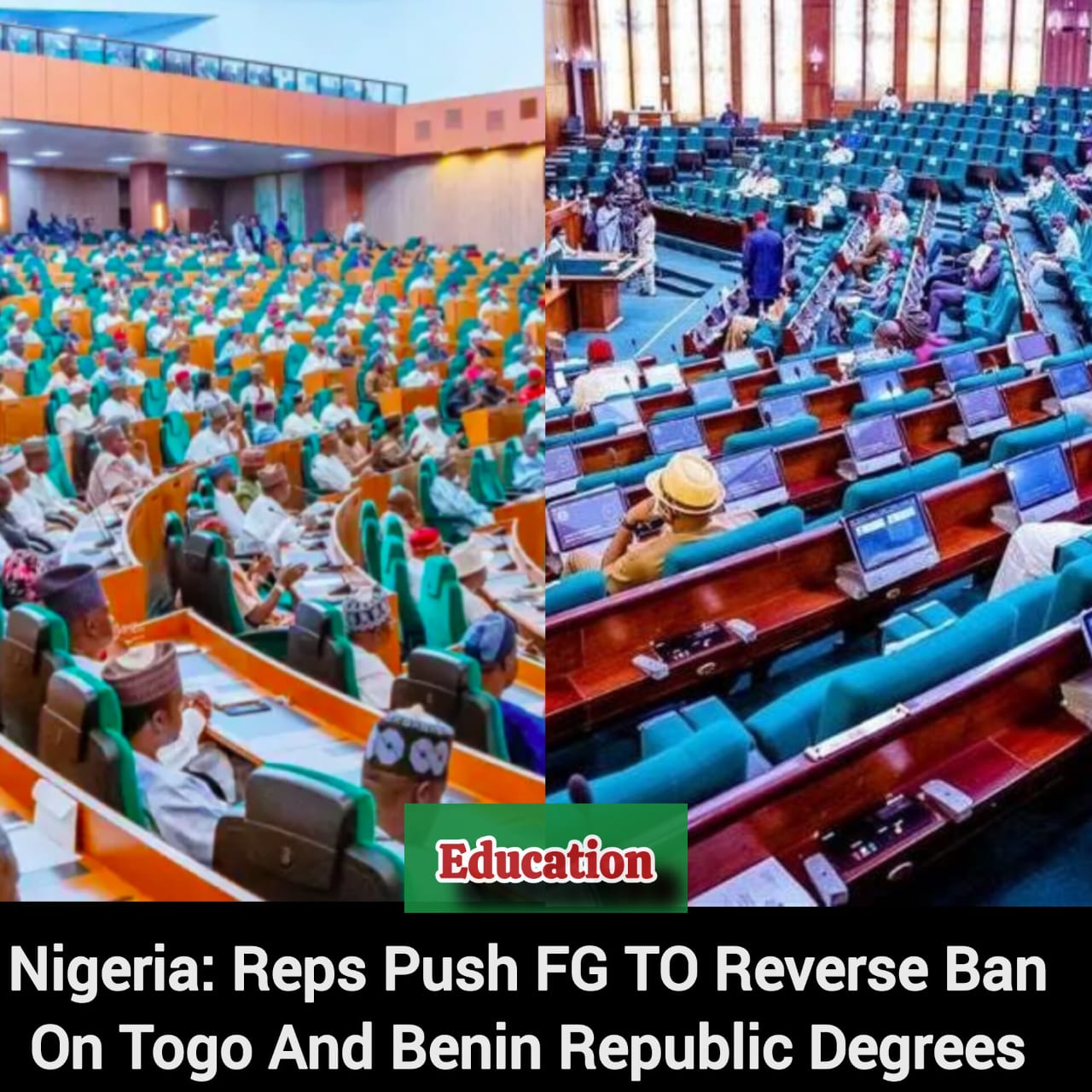
Nigeria’s reps call to reverse the blanket ban on degrees from the Benin Republic and Togo. Here’s what the policy means for graduates and what should happen next.

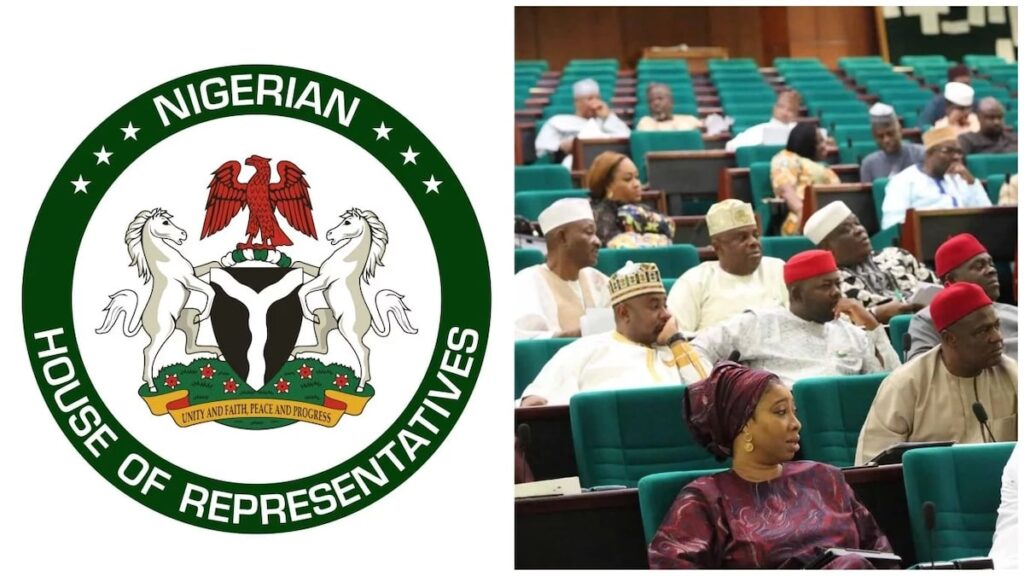
Nigeria’s House of Representatives has taken a firm stance on one of the most pressing issues facing the country’s education sector.
On 12 March 2026, lawmakers formally called on the Federal Government to reverse its blanket invalidation of degree certificates obtained from the Republic of Benin and Togo. This decision has left thousands of graduates in professional limbo.
The motion, which followed the adoption of a report by the House Committee on Public Petitions, was triggered by a petition from Sovereignty Legal Practitioners, acting on behalf of stakeholders in the education sector.
At its core, the debate raises a question that cuts to the heart of educational policy: when fraud is the problem, is punishing everyone really the solution?
Background: Why the Ban Was Introduced
The Federal Government’s decision to suspend the accreditation and evaluation of degrees from the Benin Republic and Togo was not made lightly.
In January 2024, an undercover investigation exposed widespread certificate racketeering involving institutions in both countries. The findings were alarming — a sophisticated network of fraudulent qualifications making their way into Nigeria’s workforce and public service.
The government’s response was swift. All degree certificates from both countries were invalidated pending further review. On the surface, the policy seemed decisive. In practice, it created an enormous problem for graduates who had earned their qualifications honestly.
READ ALSO: Dating A Short Man Feels Like I Am Dating My Son— Diminutive Ghanaian Woman (Video)
The Case Against a Blanket Ban
Committee Chairman Laori Kwamoti presented the committee’s findings clearly: a blanket ban, however well-intentioned, is a blunt instrument. It makes no distinction between a legitimate graduate who spent years studying abroad and someone who purchased a certificate from a diploma mill.
The consequences for those caught in the crossfire are significant. Affected graduates may find themselves locked out of employment, unable to have their qualifications recognised by Nigerian employers or professional bodies — despite having done nothing wrong. Their academic records are effectively rendered worthless by a policy designed to catch fraudsters, not them.
This is the core problem with sweeping sanctions in education policy. A minority usually commits fraud. When the penalty falls on everyone, the policy punishes the many for the actions of the few.
What the House of Representatives Is Recommending
Rather than maintaining the blanket ban, the House Committee on Public Petitions has proposed a more measured approach. Their key recommendations include:
- A case-by-case verification process to assess individual certificates on their own merits, rather than invalidating all degrees from both countries outright
- Collaboration between Nigeria’s Federal Ministry of Education and education authorities in Benin and Togo to strengthen cross-border verification systems and curb academic fraud
- Proper authentication frameworks for foreign qualifications, ensuring that legitimate degrees are recognized and fraudulent ones are identified and rejected.
These recommendations reflect a more proportionate approach — one that targets the actual problem without collateral damage to innocent graduates.
Why Verification Matters More Than Prohibition
The recommendations put forward by the House point to a broader truth about how countries should manage foreign qualifications. Outright bans are rarely sustainable long-term solutions. They disrupt legitimate academic pathways, deter genuine students from pursuing regional education opportunities, and create uncertainty for employers trying to assess candidates’ credentials.
A robust, case-by-case verification system, by contrast, addresses the root cause. It creates accountability without penalising those who played by the rules. Countries such as the United Kingdom and Canada have well-established frameworks for assessing foreign qualification systems that are thorough, fair, and adaptable as circumstances change.
For Nigeria, building a similar infrastructure would require investment and inter-agency cooperation. But the long-term benefits of a more trustworthy credentialing system and greater regional educational integration within West Africa far outweigh the short-term administrative effort.
The Bigger Picture: Academic Fraud in West Africa
Certificate racketeering is not unique to the Benin Republic and Togo. Across West Africa, the demand for qualifications, particularly among those seeking public sector employment, has fuelled a black market for fraudulent academic credentials.
The consequences extend beyond individual fraud; they undermine public trust in educational institutions and erode the credibility of legitimate qualifications.
Nigeria has grappled with this issue domestically as well. Degree mills and certificate forgeries have been a persistent challenge for regulatory bodies such as the National Universities Commission (NUC).
Addressing the problem at a regional level requires sustained collaboration, not unilateral bans that strain diplomatic and educational ties with neighbouring countries.
What Happens Next?
The House of Representatives’ recommendations are now before the Federal Government. Whether the government will act and how quickly remains to be seen. The Ministry of Education will need to engage with its counterparts in the Benin Republic and Togo to establish the verification frameworks that the committee has recommended.
For the thousands of graduates currently affected by the ban, the outcome of these deliberations is anything but abstract. Their careers, professional registrations, and livelihoods depend on a resolution that is both fair and effective.
A Smarter Path Forward
The House of Representatives is right to push back on the blanket ban. Fraud demands a targeted response, one that identifies bad actors rather than penalising entire cohorts of graduates who studied in good faith.
Building better verification systems will take time and political will. But it is the only approach that protects the integrity of Nigeria’s education system without sacrificing fairness.
As the Federal Government considers its next steps, the voices of affected graduates and the lawmakers advocating on their behalf deserve to be heard.

Galaxy S26 Update Removes Perplexity’s Hey Plex Feature
Samsung’s February 2026 update removed the Hey Plex voice wake-up from the Galaxy S26 series. Here’s what happened and what users can do now.
Samsung’s Galaxy S26 series launched with one of its most talked-about AI features, Perplexity’s “Hey Plex” voice wake-up. But a recent software update has quietly pulled it from the device, leaving early adopters confused and wondering what comes next.
If you’ve just picked up a Galaxy S26 Ultra and noticed that Hey Plex has disappeared from your Perplexity settings, you’re not imagining things.
The February 2026 security update removed the Hey Plex detection option entirely. Here’s a full breakdown of what happened, why it matters, and what Galaxy S26 users can do in the meantime.
What Was Hey Plex?

When Samsung unveiled the Galaxy S26 series at Unpacked, one of its headline AI announcements was a deep integration with Perplexity—a conversational AI assistant known for delivering real-time, source-cited answers from the web.
As part of this partnership, Perplexity gained system-level access on Galaxy S26 devices. That’s a significant deal. It meant Perplexity’s AI could read from and write to system apps, saving information directly into Samsung Notes, for instance, and editing it later.
Unlike third-party apps that sit in a silo, Perplexity was embedded at the operating system level.
The Hey Plex feature was the most visible expression of this integration. Similar to how users can summon Google’s Gemini by voice, saying “Hey Plex” would launch a screen overlay of Perplexity’s voice agent, even when the screen was off. Users could ask questions, get sourced answers from the internet, and interact with their phone hands-free.
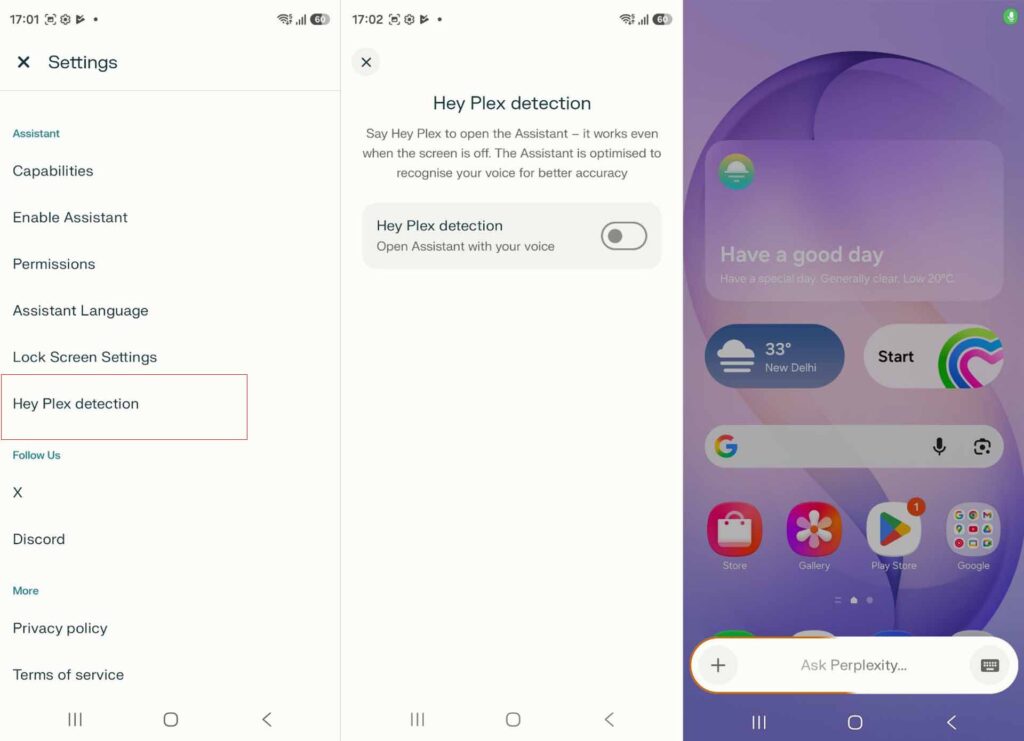
To set it up, users navigated to the Perplexity app settings, enabled “Hey Plex detection” under the Assistant section, and completed a short voice registration process by repeating a series of on-screen sentences.
READ ALSO: Galaxy Buds 4 Introduce AI‑Enhanced HD Voice to Transform Call Quality
What Changed After the February 2026 Update?
The February 2026 security update, the first major software update for the Galaxy S26 series, removed the Hey Plex detection option from the Perplexity app on Galaxy S26 devices.
The feature was confirmed as working before the update. After the update rolled out, the Hey Plex detection setting was no longer visible in the Perplexity app, and the voice wake-up phrase stopped functioning altogether on the Galaxy S26 Ultra.
The same change likely affects the standard Galaxy S26 and Galaxy S26+ as well, though the S26 Ultra is the confirmed case.
It is worth noting that Perplexity’s dedicated voice assistant remains accessible via the device’s side button. So users haven’t lost access to Perplexity itself, just the hands-free wake-word functionality that made the integration particularly seamless.
Why Was Hey Plex Removed?
Neither Samsung nor Perplexity has issued an official statement explaining the removal. It is unclear whether the feature was pulled due to a technical conflict introduced by the security patch, a stability issue, a licensing or regulatory concern, or a planned revision ahead of a more polished re-release.
Given that Hey Plex was actively working immediately after device launch and was set up and verified by users before the update, the removal appears to be update-related rather than a reversal of the feature altogether.
What Can Galaxy S26 Users Do Right Now?
If you relied on Hey Plex for hands-free AI access, your options are limited for now. Here’s where things stand:
- Side button access remains available. You can still launch Perplexity’s voice assistant by pressing the dedicated side button, though this requires physical interaction with the device.
- Gemini and Bixby are unaffected. The Galaxy S26 series supports Gemini, Bixby, and Perplexity as selectable AI assistants. If voice wake-up is a priority, Gemini’s voice activation remains functional.
- Monitor future updates. Samsung has not confirmed a timeline for Hey Plex’s return, but given that it launched as a featured capability of the Galaxy S26 series, it is reasonable to expect the feature will be restored in a future software release.
Why This Matters for Galaxy S26 Owners
The Hey Plex removal is more than a minor inconvenience. Samsung’s pitch for the Galaxy S26 was, in large part, built around its AI versatility, the ability to choose between Gemini, Bixby, and Perplexity depending on personal preference. Perplexity’s system-level access and wake-word functionality were central to that proposition.
For users who chose the Galaxy S26 specifically because of its Perplexity integration, the loss of Hey Plex, even temporarily, undermines a core part of the device’s advertised experience.
It also raises questions about the stability of deep third-party AI integrations and how quickly features can disappear following routine security patches.
That said, this is likely a temporary setback. Samsung and Perplexity’s partnership is still intact, and the underlying system-level access that makes the integration powerful hasn’t been removed. The voice wake-up feature is the piece that’s missing, and it seems plausible that a fix is already in progress.
Looking Ahead
The Galaxy S26 series has launched to strong pre-order numbers and genuine excitement around its AI capabilities. The removal of Hey Plex is a stumble rather than a sign of something more serious. Still, it’s a reminder that software updates can introduce unexpected changes, even on brand-new flagship devices.
For now, Galaxy S26 owners affected by this change should keep an eye on Samsung’s update changelog for any mention of Hey Plex’s return. When it does come back, the feature promises to be one of the more compelling hands-free AI experiences available on Android.


Download Blood Sisters Season 2 (Complete)

Download Michael (2026)

President Tinubu Confers National Honours on 50 Pro-Democracy Figures

Download Wura Season 4 (Episode 25 Added)

Download Behind the Scenes (2025) – Nollywood Movie

Nigeria: Reps Push FG to Reverse Ban on Togo, Benin Republic Degrees

Samsung Galaxy S26 Update Removes Perplexity’s ‘Hey Plex’ Voice Command

Galaxy Buds 4 Introduce AI‑Enhanced HD Voice to Transform Call Quality

Caviar Unveils 24K Gold Samsung Galaxy S26 Ultra For $11,490, Limited To Just 76 Buyers.

Orí: Rebirth (2025) – Nollywood-Yoruba-Movie


MC Oluomo Is No Longer A Valid NURTW Member; Tinubu Should Call Him To Order—Lekan Salami


Close President Putin’s Ally, Vladimir Egorov Plunges To Death From Third-Floor Window


”I Entrusted $9 Billion To Dauda Lawal, The Then FBN Executive Director. I Need To Seek Forgiveness From The Nigerian People And President Tinubu”-Diezani


”We Endorsed APC Muslim-Muslim Ticket In 2023, But Now We’re Suffering. What We Used To Buy N200 Now N2000”.- Supreme Council For Sharia Cries Out Over Hardship


”Sim Fubara Has Been Castrated, Now a Puppet Governor”-Nigerians Reacts Over Peace Deal With Predecessor, Nyesom Wike

Yahaya Bello Visited Our Office In A Convoy With The Sitting Governor- EFCC Revealed Why He Was Turned Back


Dele Momodu Pins Blame On President Tinubu Amidst the Protests

Reinstated Kano Emir Muhammadu Sanusi Gets Another Court Removal Verdict

Resurfaced 1995 Video Of Kamala Harris And Willie Brown Sparks Reactions


Our Economy Is Recovering Steadily And Gradually- President Tinubu Tells Traditional Rulers.
Watch This Blogger Home Is An Airy Inspiration
Hipster Yoga at the End of the World

Illinois’ financial crisis could bring the state to a halt
The final 6 ‘Game of Thrones’ episodes might feel like a full season
New Season 8 Walking Dead trailer flashes forward in time
Mod turns ‘Counter-Strike’ into a ‘Tekken’ clone with fighting chickens
Meet Superman’s grandfather in new trailer for Krypton
Disney’s live-action Aladdin finally finds its stars
Who are the early favorites to win the NFL rushing title?
The old and New Edition cast comes together to perform
-
News2 years ago
MC Oluomo Is No Longer A Valid NURTW Member; Tinubu Should Call Him To Order—Lekan Salami
-
Viral Gists2 years ago
Close President Putin’s Ally, Vladimir Egorov Plunges To Death From Third-Floor Window
-
Viral Gists2 years ago
”I Entrusted $9 Billion To Dauda Lawal, The Then FBN Executive Director. I Need To Seek Forgiveness From The Nigerian People And President Tinubu”-Diezani
-
Viral Gists2 years ago
”We Endorsed APC Muslim-Muslim Ticket In 2023, But Now We’re Suffering. What We Used To Buy N200 Now N2000”.- Supreme Council For Sharia Cries Out Over Hardship
-
Viral Gists2 years ago
”Sim Fubara Has Been Castrated, Now a Puppet Governor”-Nigerians Reacts Over Peace Deal With Predecessor, Nyesom Wike
-
Politics2 years ago
Yahaya Bello Visited Our Office In A Convoy With The Sitting Governor- EFCC Revealed Why He Was Turned Back
-
News2 years ago
Dele Momodu Pins Blame On President Tinubu Amidst the Protests
-
Viral Gists2 years ago
Reinstated Kano Emir Muhammadu Sanusi Gets Another Court Removal Verdict


NeuroTest reviews
01/03/2024 at 05:44
I just could not depart your web site prior to suggesting that I really loved the usual info an individual supply in your visitors Is gonna be back regularly to check up on new posts