
Politics
President Bola Tinubu blows Nigerians a kiss during inspection at Eagle’s Square-Video

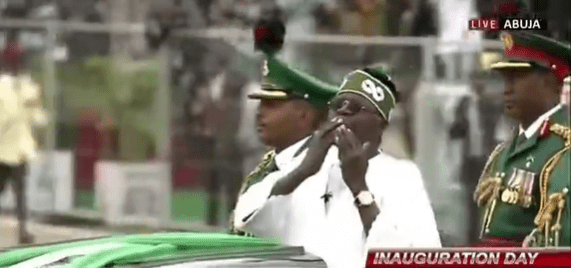
President Bola Tinubu, exuding a charismatic aura, bestowed upon Nigerians a heartfelt gesture as he commenced the inspection of the grand parade, marking his momentous inauguration as the 16th President of Nigeria. With utmost grace, he blew a gentle kiss, encapsulating his appreciation and dedication to the nation he now leads.
The air was charged with anticipation and excitement as President Tinubu embarked on this symbolic journey. Stepping into the presidential motorcade, surrounded by the resolute presence of the military, he embarked on a path that would shape the destiny of Nigeria during his tenure.
With his hand raised in a wave, the President acknowledged the cheers and well wishes from the crowd, reciprocating their unwavering support with a touch of personal warmth. The nation watched in awe, aware of the immense responsibilities that lay on the shoulders of their new leader, yet reassured by his charismatic presence.
This momentous occasion marked the beginning of a new chapter in Nigeria’s history—a chapter that President Bola Tinubu, with his passion, vision, and determination, is poised to write. As the nation embarked on this transformative journey under his leadership, hope and optimism filled the air, promising a future of progress, unity, and prosperity for all Nigerians.
Watch the captivating video below, capturing the essence of this historic moment as President Tinubu, accompanied by the military motorcade, moves forward with unwavering resolve, ready to face the challenges and embrace the opportunities that lie ahead.


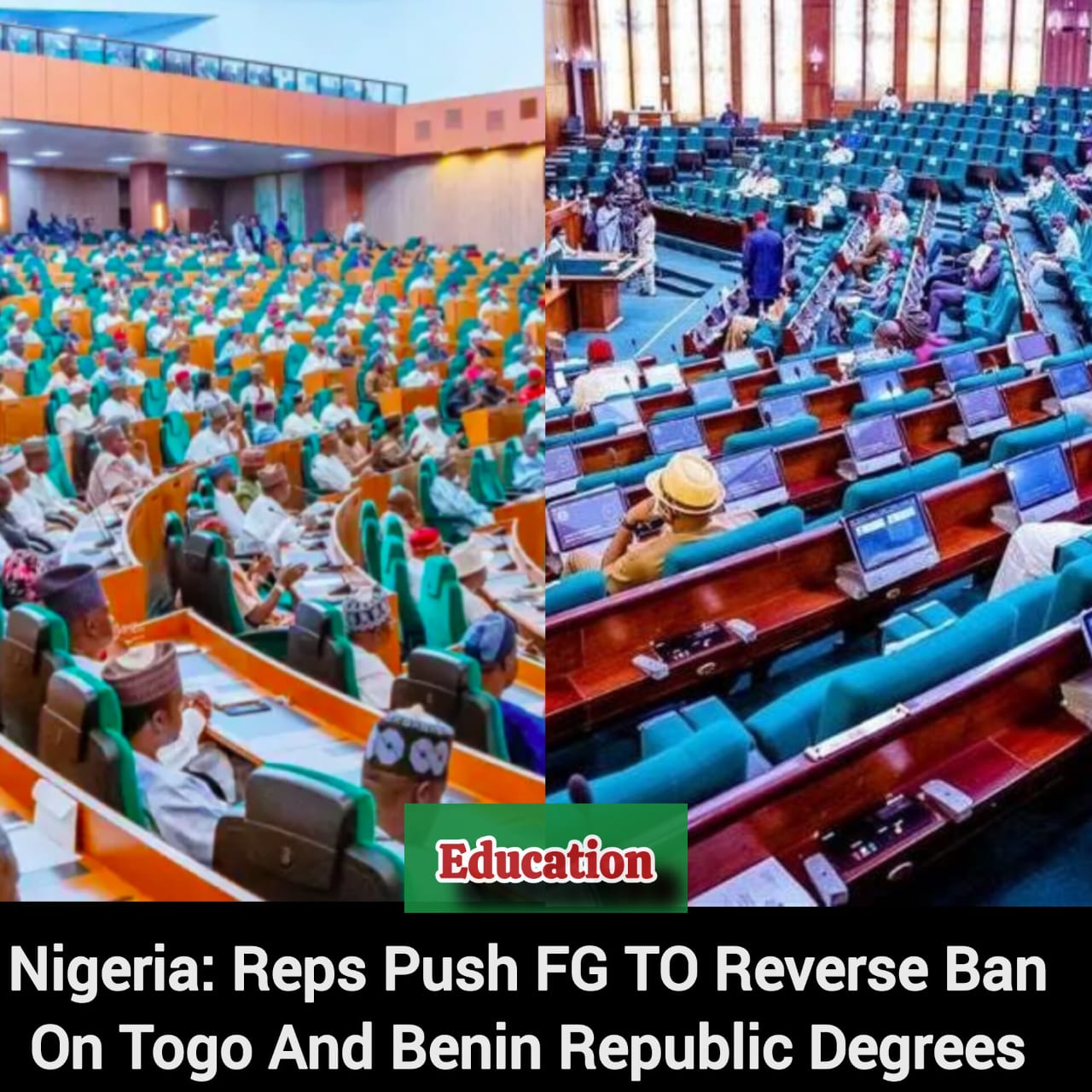
Nigeria’s reps call to reverse the blanket ban on degrees from the Benin Republic and Togo. Here’s what the policy means for graduates and what should happen next.
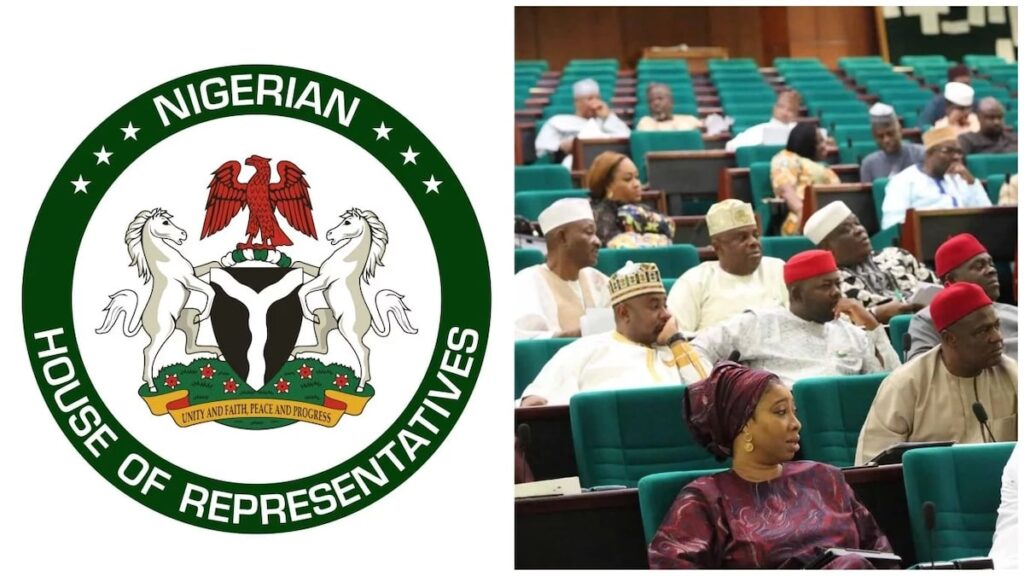
Nigeria’s House of Representatives has taken a firm stance on one of the most pressing issues facing the country’s education sector.
On 12 March 2026, lawmakers formally called on the Federal Government to reverse its blanket invalidation of degree certificates obtained from the Republic of Benin and Togo. This decision has left thousands of graduates in professional limbo.
The motion, which followed the adoption of a report by the House Committee on Public Petitions, was triggered by a petition from Sovereignty Legal Practitioners, acting on behalf of stakeholders in the education sector.
At its core, the debate raises a question that cuts to the heart of educational policy: when fraud is the problem, is punishing everyone really the solution?
Background: Why the Ban Was Introduced
The Federal Government’s decision to suspend the accreditation and evaluation of degrees from the Benin Republic and Togo was not made lightly.
In January 2024, an undercover investigation exposed widespread certificate racketeering involving institutions in both countries. The findings were alarming — a sophisticated network of fraudulent qualifications making their way into Nigeria’s workforce and public service.
The government’s response was swift. All degree certificates from both countries were invalidated pending further review. On the surface, the policy seemed decisive. In practice, it created an enormous problem for graduates who had earned their qualifications honestly.
READ ALSO: Dating A Short Man Feels Like I Am Dating My Son— Diminutive Ghanaian Woman (Video)
The Case Against a Blanket Ban
Committee Chairman Laori Kwamoti presented the committee’s findings clearly: a blanket ban, however well-intentioned, is a blunt instrument. It makes no distinction between a legitimate graduate who spent years studying abroad and someone who purchased a certificate from a diploma mill.
The consequences for those caught in the crossfire are significant. Affected graduates may find themselves locked out of employment, unable to have their qualifications recognised by Nigerian employers or professional bodies — despite having done nothing wrong. Their academic records are effectively rendered worthless by a policy designed to catch fraudsters, not them.
This is the core problem with sweeping sanctions in education policy. A minority usually commits fraud. When the penalty falls on everyone, the policy punishes the many for the actions of the few.
What the House of Representatives Is Recommending
Rather than maintaining the blanket ban, the House Committee on Public Petitions has proposed a more measured approach. Their key recommendations include:
- A case-by-case verification process to assess individual certificates on their own merits, rather than invalidating all degrees from both countries outright
- Collaboration between Nigeria’s Federal Ministry of Education and education authorities in Benin and Togo to strengthen cross-border verification systems and curb academic fraud
- Proper authentication frameworks for foreign qualifications, ensuring that legitimate degrees are recognized and fraudulent ones are identified and rejected.
These recommendations reflect a more proportionate approach — one that targets the actual problem without collateral damage to innocent graduates.
Why Verification Matters More Than Prohibition
The recommendations put forward by the House point to a broader truth about how countries should manage foreign qualifications. Outright bans are rarely sustainable long-term solutions. They disrupt legitimate academic pathways, deter genuine students from pursuing regional education opportunities, and create uncertainty for employers trying to assess candidates’ credentials.
A robust, case-by-case verification system, by contrast, addresses the root cause. It creates accountability without penalising those who played by the rules. Countries such as the United Kingdom and Canada have well-established frameworks for assessing foreign qualification systems that are thorough, fair, and adaptable as circumstances change.
For Nigeria, building a similar infrastructure would require investment and inter-agency cooperation. But the long-term benefits of a more trustworthy credentialing system and greater regional educational integration within West Africa far outweigh the short-term administrative effort.
The Bigger Picture: Academic Fraud in West Africa
Certificate racketeering is not unique to the Benin Republic and Togo. Across West Africa, the demand for qualifications, particularly among those seeking public sector employment, has fuelled a black market for fraudulent academic credentials.
The consequences extend beyond individual fraud; they undermine public trust in educational institutions and erode the credibility of legitimate qualifications.
Nigeria has grappled with this issue domestically as well. Degree mills and certificate forgeries have been a persistent challenge for regulatory bodies such as the National Universities Commission (NUC).
Addressing the problem at a regional level requires sustained collaboration, not unilateral bans that strain diplomatic and educational ties with neighbouring countries.
What Happens Next?
The House of Representatives’ recommendations are now before the Federal Government. Whether the government will act and how quickly remains to be seen. The Ministry of Education will need to engage with its counterparts in the Benin Republic and Togo to establish the verification frameworks that the committee has recommended.
For the thousands of graduates currently affected by the ban, the outcome of these deliberations is anything but abstract. Their careers, professional registrations, and livelihoods depend on a resolution that is both fair and effective.
A Smarter Path Forward
The House of Representatives is right to push back on the blanket ban. Fraud demands a targeted response, one that identifies bad actors rather than penalising entire cohorts of graduates who studied in good faith.
Building better verification systems will take time and political will. But it is the only approach that protects the integrity of Nigeria’s education system without sacrificing fairness.
As the Federal Government considers its next steps, the voices of affected graduates and the lawmakers advocating on their behalf deserve to be heard.

Former Head of State Gen. Yakubu Gowon (retd) has explained why he refused to align any political party in Nigeria.
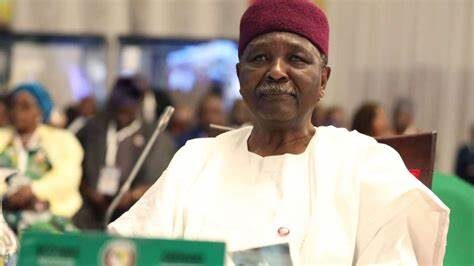
Gowon, 90, announced on Wednesday, November 27, in Abuja while receiving the League of Northern Democrats (LND), which former Kano State governor Senator Ibrahim Shekarau leads.
The elder statesman emphasised his patriotism for Nigeria, citing his military background as a driving force for his commitment to serving the country.
“I’ve always believed in taking the best from all ideologies, be it socialism, capitalism, or others, and applying them for the greater good.
“During my time in government, we valued diverse perspectives, but decisions were always made in the interest of the people and the nation.”
The former Head of State argued that the North had to make sacrifices to alleviate fears of one region’s dominance, especially considering its size and population. He stated that the idea emerged from prolonged consultations with political leaders, chiefs, and diverse groups.
At the time, he stated widespread concern in the South about the North’s dominance, which nearly led to calls for independence from all regions—west, east, and even the North.
“If we had allowed it, what would we call ourselves today? We might have ended up with separate nations—Yoruba, Igbo, Hausa, or otherwise. I hesitate to say more, as I might risk offending someone here.”
Gowon expressed sadness at the current challenges facing the North, such as the rise of groups like the Lukurawa from Mali, claiming that their activities have further exacerbated the region’s woes.
JOIN THE CONVERSATION→ Telegram | X/Twitter | Facebook | WhatsApp|WhatsApp Channel|Mobile App|Instagram
Gen. Gowon led Nigeria as a military commander for nine years, from 1966 to 1975, before being deposed by a military junta.
Politics
Tinubu Has A Better Plan To Transform Nigeria Than Other Two Rivals—Doyin Okupe Tackles Atiku, Peter Obi

Doyin Okupe, ex-Director-General of the Labour Party’s presidential campaign, has openly critiqued the 2023 presidential hopeful, Peter Obi, for his lack of solid policy documentation in support of his “consumption-to-production” campaign slogan.
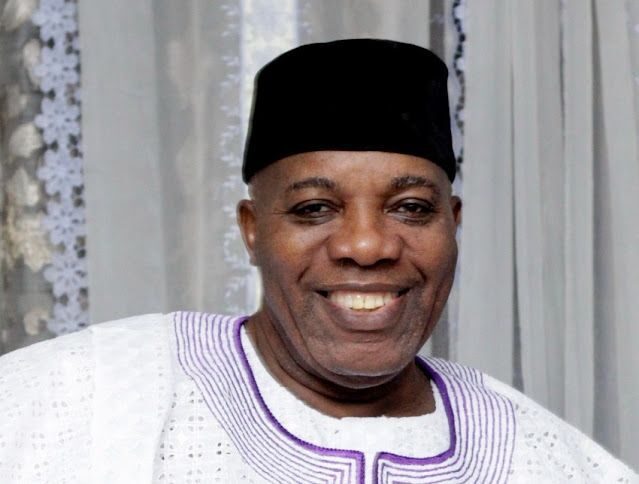
Meanwhile, Okupe praised Present Bola Tinubu on Tuesday, stating that Tinubu’s policy framework trumped those of his rivals in the 2023 electoral race.
“Tinubu has a better policy document than any of his two rivals during the 2023 presidential election.”
Okupe noted that Tinubu is meticulously executing the “Renewed Hope Agenda,” which entails settling overwhelming debts to stabilise the economic landscape.
Despite being political rivals, Okupe recognised Tinubu’s superior policy document in the 2023 presidential race, according to a report by NAN.
Atiku Abubakar, the Peoples Democratic Party (PDP) candidate, also received criticism from Okupe.
He reasoned that Atiku’s strategies heavily depended on theoretical loan arrangements, which were unrealistic given Nigeria’s economic circumstances at the time; international institutions were hesitant to offer loans.
“All we were saying was that we wanted to take Nigeria from consumption to production; good rhetoric, but it was not grounded either in policy development or principle application,” he added
Regarding Peter Obi’s campaign, Okupe commented that the Labour Party lacked a policy document guiding its vision, stating, “We wanted to take Nigeria from consumption to production; good rhetoric, but it was not grounded either in policy development or principle application.”
Tinubu’s economic reform efforts, particularly in handling foreign exchange issues and tax reforms, were applauded by Okupe, stating it matched his campaign promises.
He added that Tinubu’s focus on systematic, actionable solutions was commendable, notwithstanding their political differences.
JOIN THE CONVERSATION→ Telegram | X/Twitter | Facebook | WhatsApp|WhatsApp Channel|Mobile App|Instagram
In conclusion, Okupe spotlighted Tinubu’s “Renewed Hope Agenda” as a solid tactic in addressing Nigeria’s current issues, suggesting that it could potentially propel the nation to greater heights.

Download Blood Sisters Season 2 (Complete)

Download Michael (2026)

President Tinubu Confers National Honours on 50 Pro-Democracy Figures

Download Wura Season 4 (Episode 25 Added)

Download Behind the Scenes (2025) – Nollywood Movie

Nigeria: Reps Push FG to Reverse Ban on Togo, Benin Republic Degrees

Samsung Galaxy S26 Update Removes Perplexity’s ‘Hey Plex’ Voice Command

Galaxy Buds 4 Introduce AI‑Enhanced HD Voice to Transform Call Quality

Caviar Unveils 24K Gold Samsung Galaxy S26 Ultra For $11,490, Limited To Just 76 Buyers.

Orí: Rebirth (2025) – Nollywood-Yoruba-Movie

MC Oluomo Is No Longer A Valid NURTW Member; Tinubu Should Call Him To Order—Lekan Salami

Close President Putin’s Ally, Vladimir Egorov Plunges To Death From Third-Floor Window

”I Entrusted $9 Billion To Dauda Lawal, The Then FBN Executive Director. I Need To Seek Forgiveness From The Nigerian People And President Tinubu”-Diezani

”We Endorsed APC Muslim-Muslim Ticket In 2023, But Now We’re Suffering. What We Used To Buy N200 Now N2000”.- Supreme Council For Sharia Cries Out Over Hardship

”Sim Fubara Has Been Castrated, Now a Puppet Governor”-Nigerians Reacts Over Peace Deal With Predecessor, Nyesom Wike

Yahaya Bello Visited Our Office In A Convoy With The Sitting Governor- EFCC Revealed Why He Was Turned Back

Dele Momodu Pins Blame On President Tinubu Amidst the Protests

Reinstated Kano Emir Muhammadu Sanusi Gets Another Court Removal Verdict

Resurfaced 1995 Video Of Kamala Harris And Willie Brown Sparks Reactions

Our Economy Is Recovering Steadily And Gradually- President Tinubu Tells Traditional Rulers.
Watch This Blogger Home Is An Airy Inspiration
Hipster Yoga at the End of the World

Illinois’ financial crisis could bring the state to a halt
The final 6 ‘Game of Thrones’ episodes might feel like a full season
New Season 8 Walking Dead trailer flashes forward in time
Mod turns ‘Counter-Strike’ into a ‘Tekken’ clone with fighting chickens
Meet Superman’s grandfather in new trailer for Krypton
Disney’s live-action Aladdin finally finds its stars
Who are the early favorites to win the NFL rushing title?
The old and New Edition cast comes together to perform
-
News2 years ago
MC Oluomo Is No Longer A Valid NURTW Member; Tinubu Should Call Him To Order—Lekan Salami
-
Viral Gists2 years ago
Close President Putin’s Ally, Vladimir Egorov Plunges To Death From Third-Floor Window
-
Viral Gists2 years ago
”I Entrusted $9 Billion To Dauda Lawal, The Then FBN Executive Director. I Need To Seek Forgiveness From The Nigerian People And President Tinubu”-Diezani
-
Viral Gists2 years ago
”We Endorsed APC Muslim-Muslim Ticket In 2023, But Now We’re Suffering. What We Used To Buy N200 Now N2000”.- Supreme Council For Sharia Cries Out Over Hardship
-
Viral Gists2 years ago
”Sim Fubara Has Been Castrated, Now a Puppet Governor”-Nigerians Reacts Over Peace Deal With Predecessor, Nyesom Wike
-
Politics2 years ago
Yahaya Bello Visited Our Office In A Convoy With The Sitting Governor- EFCC Revealed Why He Was Turned Back
-
News2 years ago
Dele Momodu Pins Blame On President Tinubu Amidst the Protests
-
Viral Gists2 years ago
Reinstated Kano Emir Muhammadu Sanusi Gets Another Court Removal Verdict